
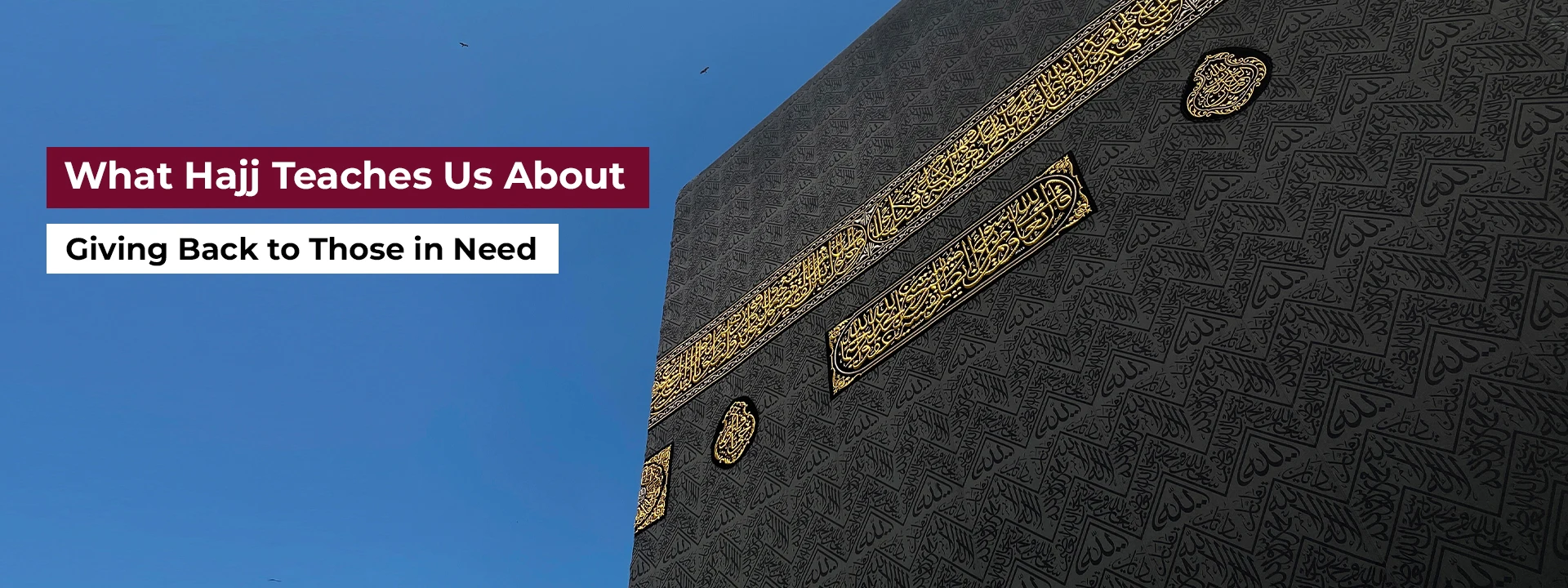
Understanding lessons from hajj about helping others begins with a simple truth. Hajj is not just a journey to Makkah. It is a transformation that reshapes how we see people, wealth, and responsibility.
When pilgrims return, the question is not what they experienced. It is what they do next. This is where what hajj teaches us becomes truly meaningful.
Hajj Is More Than a Journey: A Spiritual Awakening
Hajj strips life back to its essentials. No distractions, no status, no comfort zones.
In that space, something shifts.
You begin to reflect more deeply. You recognise your dependence on Allah. You also begin to notice others more, especially those who are struggling.
This awakening is subtle but powerful. It lays the foundation for how hajj inspires generosity, not as a one-off action, but as a lasting mindset.
A Powerful Reminder of Equality Among All Believers
During Hajj, millions stand side by side wearing the same simple garments. There is no visible difference between wealth and poverty.
It raises an important question. If we are equal before Allah, why should inequality remain in how we treat one another?
This is one of the clearest what hajj teaches us moments. It breaks the illusion of status and reminds us that dignity belongs to everyone.
That understanding naturally leads to giving.
Letting Go of Wealth: A Core Lesson from Hajj
Hajj requires financial sacrifice, but it also teaches something deeper about wealth itself.
You begin to realise:
wealth is temporary
giving purifies what we own
holding back often limits spiritual growth
This is where the importance of giving back in islam after hajj becomes clear. The journey teaches us to loosen our attachment and use our resources with purpose.
The True Meaning of Sacrifice Beyond Qurbani
Sacrifice during Hajj is not limited to rituals. It is experienced through patience, time, and letting go of personal comfort. But the real question is, what happens after Hajj? True sacrifice does not end with the pilgrimage. It continues in everyday life, often in quiet and unseen ways. It may be choosing to give when it feels inconvenient, putting someone else’s needs before your own, or supporting those who cannot repay you.
For example, someone returning from Hajj may begin regularly helping a struggling neighbour with groceries or quietly supporting a family in need each month. These actions may seem small, but they reflect a deeper shift in mindset. This is where lessons from hajj about helping others become real, extending far beyond the journey itself and shaping how we live, give, and care for others every day.
Walking in Humility: Experiencing Hardship and Building Empathy
Hajj is physically demanding. The crowds, the heat, the exhaustion all create a shared experience of hardship. Now consider this.
For many people around the world, this level of hardship is not temporary. It is daily life.
That realisation builds empathy. It is one of the ways how Hajj inspires charity in Islam so naturally. When you feel even a small part of struggle, you become more aware of those living with it constantly.
Why Charity in Islam Is a Lifelong Responsibility
Hajj does not mark the end of giving. It marks the beginning of a more conscious approach to it.
Charity in Islam is not seasonal. It is continuous.
After Hajj, many people feel a stronger pull to give regularly, not occasionally. This reflects the importance of giving back in islam after hajj, where generosity becomes part of daily life rather than a single moment.
How Hajj Inspires Us to Give Back
So what really changes after Hajj? It is often not dramatic or immediate. Instead, it shows up in small, consistent ways. A person may become more aware of the needs around them, more willing to give without hesitation, and more conscious of their responsibility towards the Ummah.
For instance, someone who has completed Hajj may start setting aside a portion of their income each month to support a family in need or respond more quickly when they see an appeal for help. These actions are not always visible to others, but they reflect a deeper transformation. This is how Hajj inspires generosity in real terms, turning intention into meaningful and consistent action.
Lessons from Hajj We Can Apply in Everyday Life
Hajj is temporary, but its lessons are meant to stay.
We can apply them by:
giving regularly, even in small amounts
supporting causes that uplift communities
showing kindness in daily interactions
being mindful of those less fortunate
These actions reflect the core of lessons from Hajj about helping others and ensure the impact continues long after the journey ends.
Spiritual Rewards of Helping Those in Need
Giving is not only beneficial for others. It transforms the giver.
When we help someone in need, we often experience:
a sense of inner peace
increased gratitude for our own blessings
a stronger connection to the faith
This is part of How Hajj inspires charity in Islam, where acts of giving become a path to spiritual growth.
Keeping the Spirit of Hajj Alive After the Pilgrimage
The real success of Hajj is measured after the return.
Do the lessons stay with us?
Do our actions reflect what we experienced?
Keeping the spirit alive means continuing to give, reflect, and stay connected to the values we embraced. This is where the importance of giving back in islam after hajj becomes a daily commitment.
Let Hajj Transform the Way We Give
Imagine someone returning from Hajj and deciding to support a struggling family every month. It may seem like a small step, but for that family, it changes everything.
This is the real outcome of what hajj teaches us. It transforms giving from an occasional act into a consistent way of life. When Hajj changes how we give, it changes how we live.
Final Thoughts
Reflecting on lessons from Hajj about helping others reminds us that Hajj is not just a moment in time. It is a lifelong influence. When you carry forward what hajj teaches us, you give more sincerely, act more compassionately, and live with greater purpose.
Frequently Asked Questions
Hajj teaches selflessness, equality, and responsibility. It encourages Muslims to support others consistently, not just during specific occasions.
Charity is a continuous obligation. It strengthens communities, supports those in need, and deepens one's relationship with Allah.
Sacrifice teaches detachment from comfort and wealth, making it easier to give and support others sincerely.
Helping others brings barakah, strengthens faith, and earns reward from Allah, both in this life and the hereafter.
Find Resources & More Ways to Donate